READ OUR BLOG


air-guitar.jpg
19/Mar/2020

Didn’t think we’d ever be writing those words!

Update – 28 April 2020. This blog has been updated in line with the new restrictions on gatherings and physical distancing, and to include a video from Dr Adam Castricum Sport and Exercise Physician on the importance of being physically active during isolation.

COVID-19 has had a massive impact on our worlds – our health, travel, work, finances, schooling, family life, and all the little freedoms we once took for granted. Isolation has seen our physical world become much smaller.

While we struggle with all of these things, an important area when it comes to our health that many of us are finding difficult to wrap our heads and bodies around is getting enough exercise.

If you live with a musculoskeletal condition like arthritis, back pain or osteoporosis you know how important exercise and being active is. It helps us manage our condition, our pain, our weight, and our mental health. It also helps us sleep better and gives us the opportunity to socialise with others.

However not being able to attend our classes, fitness centres and sporting clubs means we need to look at alternative ways to exercise.

Here’s a few ideas to help you stay active during the pandemic:

  • Schedule time for it. Our lives have turned upside down, so having a regular routine, including time for exercise is really important, for both our physical health, but also our mental health and wellbeing.
  • Exercise with others. Grab your family and go for a bike ride, walk around the park, shoot hoops in the driveway, play leapfrog on the lawn. Or connect with friends via video apps and exercise together. Along with having a regular time for exercise, having an exercise buddy – whether in person or online – will help keep you motivated and accountable.
  • Get outside and go for a walk, jog or run. It’s still a great way to stay active. If you’re doing it with a friend, make sure you’re abiding by the latest restrictions regarding gatherings and physical distancing. And don’t forget – COVID-19 doesn’t spread to our dogs, so take them for a walk. They’ll love it! And avoid walking, jogging or running in busy areas, or during busy times.
  • Use an old fashioned DVD and exercise in front of your TV. Or stream an exercise program online. Or use an exercise app. There are so many to choose from. Just make sure that the exercises are performed by people who know what they’re doing.
  • Dance around the house. Get the blood pumping with some of your favourite, high energy music, and shake it off!
  • Walk/run/skip around your home and yard – use the space you have available. At the beginning of the Chinese lockdown there was news of a man who ran a marathon in his own apartment! While you don’t have to go to that extreme, it highlights that you can do all kinds of things in small spaces if you’re a little creative.
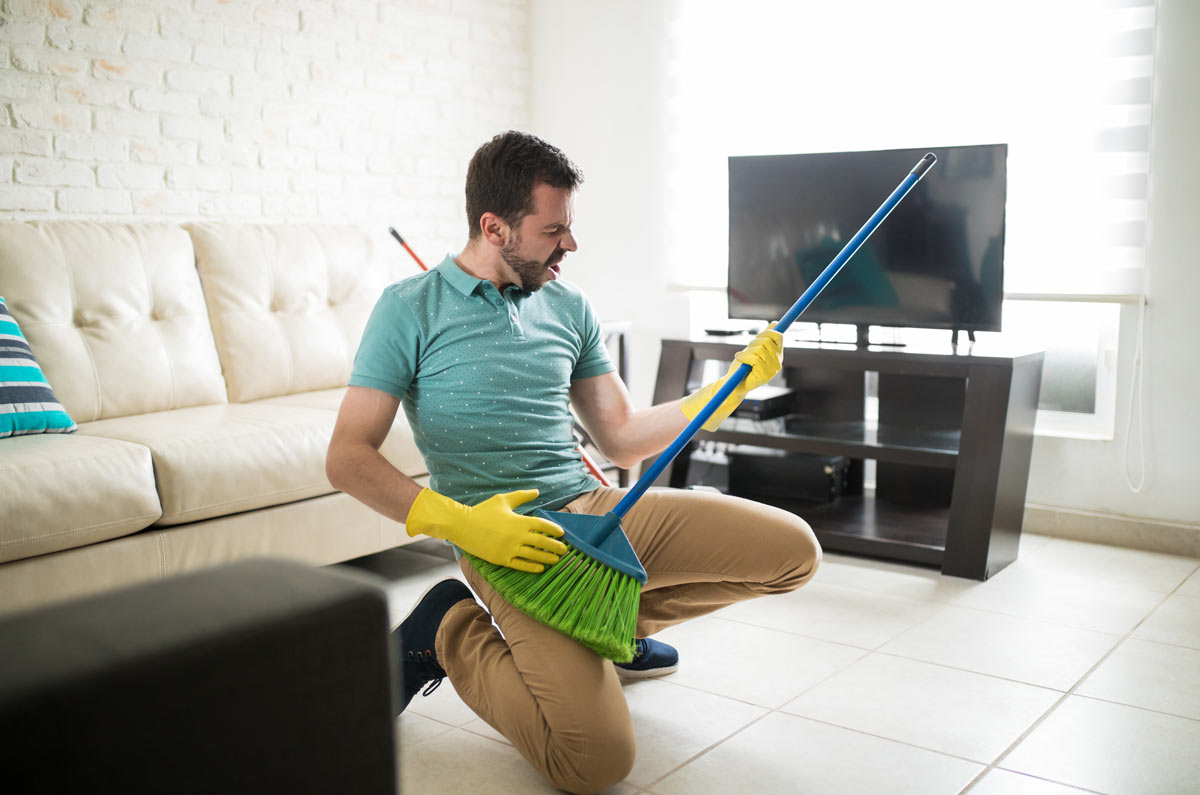
  • If you have a WII Fit, or any of the electronic karaoke/guitar/music games that plug into your TV, set it up and go for it. Sing, dance and game to your hearts content. If you don’t have any of the electronics, just do some air guitar or air drumming. We’ve all done it, and it’s so much fun.
  • Get creative! One of our families has told us about how they’re blowing up balloons and using them as balls. For example, keeping them off the ground while they sit on opposite sides of the table, hitting balloons with fly swats and other improvised rackets for a game of tennis. We can be very creative when we need to be – let your inner exercise guru loose!
  • Use what you have around the house. You may already have exercise balls/bands and weights to use, or you can improvise with cans of soup for weights, steps ups on your stairs etc.
  • Incorporate incidental exercise. Check out our blog on how the little bits and pieces you do over the course of your day – for example cleaning, talking on the phone – can be made more active and really add up.
  • Go for a ride. Use an indoor stationary bike, or hit the streets or park on your bicycle.
  • Consider hiring or buying (new or second hand) exercise equipment such as a treadmill, exercise bike or cross-trainer. You can use the equipment to add variety to your exercise program, and it’ll also come in handy for those days it’s too wet or cold to venture outdoors.

There are lots of things you can do to remain active during this pandemic, and stay safe. These are just some of them. For more information, visit our website or call our MSK Help line weekdays on 1800 263 265. Or email helpline@msk.org.au.

More to explore


Shirani2.jpg
13/Mar/2020

Having children, self-belief and acceptance

Written by Shirani Wright

Read part 1 of Shirani’s story.

Another thing that was very hard for me – and I’m sure turned out much better than the doctors thought – was having my children. I don’t think my rheumatologist was overly keen on the idea, but he knew me well enough, not to try and talk me about of it as he knew that nothing was going to stop me and nothing did!

I was advised that I had to come off my methotrexate for three months before we started trying to get pregnant. This is because it’s a category X drug for pregnancy and can cause serious birth defects, including spina bifida. This was a bit scary.

The doctors thought that, by coming off methotrexate, I might have a big flare-up and not be able to even get pregnant. I came off methotrexate and luckily for me, no flare-up. They also thought if I did get pregnant there were a lot of other possible complications that could have resulted in the baby being born early.

My doctors pretty much implied I was too sick to get pregnant and carry to full term. Well, you know what they could do with that idea!! Even if I had to sit in bed for nine months and not move, I was determined to have children and that’s what I did. I have two beautiful girls, Chloe and Jacinta. I’m not going to say it was always easy, but it was worth it. I feel extremely luckily to have my two healthy girls.

I’d like the all the parents of kids with arthritis, and children with arthritis, to know it’s possible to have children of your own if you want to, even if you do have arthritis.

Having arthritis does make looking after my girls difficult sometimes, but I wouldn’t have it any other way. I wasn’t about to let arthritis stop me from having children!!! It’s easier, now they are both at school. I’m also very lucky to have a very supportive husband who understands my health issues and does a lot with the children as well as working full time and supporting me emotionally.

I also get emotional support from my friends, and family, but I’ve found that the Young Women’s Arthritis Support Group has helped greatly, as everyone in the group knows what it’s like to be in pain, be on medication, have bad days and everything that goes along with having a chronic illness.

I believe having arthritis has made me a strong person mentally and that it has helped me develop a positive attitude towards life. It often hasn’t been easy but I’m not one to back down from a challenge. I sometimes wonder what I’d be like as a person if I didn’t have arthritis.

We all have our limitations whether we have a disability or not. There are those who might not be able to walk but they might be a terrific artist. People with a disability can have just as fulfilling a life as someone without one. We can do anything we set our mind to. It might just take a bit of extra work but we can do it.

If I can give any advice to children with arthritis I would say, we need to believe in ourselves. We need to accept that we have a disability and that we have limitations but we shouldn’t let our disability define who we are. We are more than our disability.

To leave you, I’ll finish with a thought. Never give up and always shoot for your dreams!


Shirani.jpg
12/Mar/2020

Growing up, school and working

Written by Shirani Wright

I wake up in the early morning to go to the toilet. I look at the time – 5.00am – early enough to take my tablets. I turn on the lamp and automatically reach over and take my prednisolone, plus eight other tablets so they have time to work before I need to get up and get my girls ready for school. I go back to sleep until my alarm goes off at 6.50am and then I start my day.

Taking medication is a part of my life as I have systemic juvenile idiopathic arthritis. I was three and a half when it all began.

It started when I got bronchitis. My condition worsened and I was in hospital for six weeks. No one knew what was wrong with me. The doctors thought I had pneumonia, and although I was on IV antibiotics I just wasn’t getting better.

I was transferred to The Royal Children’s Hospital, where I had a number of investigations on my lungs and they discovered that I had a massive amount of inflammation. With this discovery and further tests, I finally had a diagnosis – systemic juvenile idiopathic arthritis or SJIA, an autoimmune condition that has stayed with me to this day. Not many people know that lung involvement, like I had, can be a part of some types of arthritis. And for me, joint involvement happened a bit later.

Since I was diagnosed at 3, I don’t remember not having arthritis. I think maybe this has made it easier for me than other people I’ve met who got arthritis at an older age, who might have been used to a certain life. I don’t remember what it’s like not to be in pain or discomfort every day or not to regularly go to the doctors, have tests, and be in hospital. It’s all just a part of my life and I’ve accepted it.

My twin sister and I had tennis lessons for a while but I remember I couldn’t run fast enough. I also did gymnastics too, so as you can see I didn’t let my arthritis stop me! My sister played basketball with a school friend for a time, I didn’t because of my arthritis. I don’t remember being particularly upset by this. I used to go and watch her team play and sometimes score for them.

At school, my arthritis didn’t affect me that much. I pretty much always joined in with PE unless I was having a particularly bad day. Sometimes if we had to walk somewhere from school my mum would organise for me to get driven by one of the teachers and I could always take a friend. Sometimes I’d be late getting to school if I was waiting for my tablets to work.

I felt like I had a bit of support from Musculoskeletal Australia growing up but not as much as there is available now. The Arthritis Foundation of Victoria (as it was known back then) ran camps during the summer holidays as a way for young people with arthritis to get together, meet each other etc. On these camps, they offered workshops run by doctors, massages and free time. It also gave us the chance to meet other young people with arthritis.

Up until those camps, I think I had only met one other child with arthritis; that’s why I think MSK Kids is a really great idea. It gives kids and young people an opportunity to meet each other and support each other. It also gives their parents the same thing. I’m sure my parents would have liked to have known some parents of kids with arthritis.

One thing I didn’t like about having to take medication for my arthritis is that because I’ve taken prednisolone since I was 3 (and I’m still on it 41 years later) it has stunted my growth. So when I was 15 years old, I looked 10 or younger, and that really used to bug me! I remember once I was in a shop with my mum and the shop assistant said, “are you mum’s little helper” and I got really upset. As my mum said though, it’s not her fault she doesn’t know. Now that I’m an adult, being short doesn’t worry me really from a social point of view, it’s more on a practical side when I sometimes have trouble reaching things at the supermarket, or glasses on shelves etc.

I think one thing that got me through childhood with arthritis,(apart from my mum)
is a positive attitude. Because I have arthritis there are things I can’t do. However, I try to concentrate on what I can do rather than what I can’t. This isn’t always easy, but I try and take the attitude that there’s no use worrying about what I can’t do, as that won’t change the situation. I try not to get grumpy or sad about it as this doesn’t change anything. It just gets me down and isn’t much fun for the people around me.

It’s not always easy to accept my limitations but I try and think “well everyone, including healthy people, has limitations”. Not everyone can run a marathon but does that mean they’re not as good as someone who can? I would say NO. Those people who can’t do one thing might be able to do something that another person can’t do. A fish can’t walk, but they’re happy.

One limitation I have had to deal with because of my arthritis is that I’m not working.

I left school and went to university and then TAFE. I worked in several part-time jobs over 10 years. I had to change fields of jobs from Nanning to reception/admin work as nannying was too physical. I did try working full-time for a year and a half but ended up in hospital as I often became breathless (which happens a lot with my type of arthritis).

At that stage, my doctor said I needed to cut my hours back. I found this hard as up until then my arthritis had not really limited me in a big way. But the fact that I couldn’t work full time was a big thing. It made me feel like I was sick and not normal.

One of my friends didn’t understand this. She said it was good that I only had to work part-time. What she didn’t understand was that working part-time wasn’t a choice! I didn’t choose it, I had to do it for health reasons. After some time and thought, I accepted this change and continued with my life. I no longer do any paid work as my health isn’t up to it.

Read part 2 of Shirani’s story.


cleaning.jpg
31/Jan/2020

With our crazy, busy lives it can sometimes feel next to impossible to squeeze in time for exercise. Add to that the unpredictability of living with a chronic condition, and our planned activities can often go flying out the door.

But there are things you can do to be more active. Incidental exercise – or the little bits and pieces you do over the course of your day – can really add up. It’s important to note that incidental exercise should not replace your regular, structured exercise program, but they’re a great way to boost your activity levels.

Here are some things you can do to increase your incidental exercise.

  • Watching TV? Whether you’re watching the latest episode of your favourite show or binge watching an entire series, get up and move around during the ads. No ads? No problems. At the end of each episode, do something active. Go outside and check the letterbox. Take the dog for a walk around the block. If you have an exercise bike or treadmill, use it while watching your show.
  • Love reading? Download an audio book and listen to it as you go for a walk. Just be mindful about how far you walk. It’s easy to get caught up in a book and walk further than you planned! Which has the potential to aggravate your condition and pain levels if you do too much.
  • Going for a long drive? Make your journey more interesting, and more active by scheduling stops for you to stretch, walk around and discover new areas. It’s amazing what you can find when you take the time to explore.
  • Shopping? Park your car a little further away from the shops than you normally would. Walk up or down the travellator or escalator – even if it’s just for part of the ride – rather than just standing in place.
  • Work meeting? Take it outside. Suggest that you have walking meeting. You get to be active and less sedentary, with the added benefit of fresh air.
  • Catching public transport? Get off a stop before your usual one. Explore your neighbourhood while getting some exercise and breathing deeply.
  • On the phone? Walk around while chatting, rather than sitting down. But avoid moving about if you’re texting or looking at your screen. Our aim is to increase activity levels safely, not get injured in the process!
  • Gaming? Fun! But it’s so easy to get caught up in the heat of the battle/chase/adventure, so set your phone alarm to go off every 30 minutes so you can get up and move.
  • Cleaning? Go hard. Give the tiles an extra vigorous scrub. Flatten your recyclables rather than just tossing them straight into your recycling bin. Clean your windows (groan – but how good do they look when you’re done?). Vacuum the house and use all of the little attachments (who knew they made such a difference?).

Obviously there’ll be times when these activities are not possible or practical – especially if you’re having a flare. However some of them may actually help with your pain – things like standing and moving when your back is really sore, breaking up long trips with stops and stretches – they’ll provide exercise and pain relief.

Give incidental exercise a try. Before you know it, you’ll be feeling more energised and noticing a difference with your pain levels, sleep quality and mood.

Plus your house will be sparkling! Win-win!

More to explore


dog-sleeping.jpg
31/Jan/2020

If you live with persistent pain, then you’ve probably had many nights when sleep has eluded you. You’ve tossed and turned, gotten up, watched TV, checked your phone, gone back to bed, and then tossed some more.

Pain, muscle tension, anxiety and other factors can interfere with your ability to get to sleep, stay asleep and the quality of your sleep. And sadly, not getting enough good quality sleep can affect your pain levels, your muscle tension and your anxiety levels.

It’s like a colossal feedback loop that’s spiraling out of control and you can’t break free. OK, that was a little dramatic, but I’m also a little tired and cranky 🙁

The good news is there are many things you can do to break this cycle and get back to having a good night’s sleep.

  • Try not to put too much pressure on yourself to go to sleep. This leads to anxiety and stress if you don’t fall asleep quickly. Feeling anxious or stressed will affect your ability to sleep. Get out of bed. Don’t lie in bed tossing and turning. Have a warm drink (e.g. milk, no caffeine), do some gentle stretches or breathing exercises and go back to bed when you feel more comfortable.
  • Develop a sleep routine. Try to go to bed and get up at the same time each day.
  • Try some relaxation techniques. Consider mindfulness, visualisation, deep breathing or a warm bath before bed. These techniques will help you become more relaxed and may help you manage your pain better so that you go to sleep, and sleep well.
  • Write it down. Thoughts, worries and anxiety can prevent good sleep. Don’t take them to bed. Write them down and then put them away. You can deal with them tomorrow.
  • Be active during the day. As well as the many other benefits of regular exercise, it will help you fall asleep and stay asleep longer.
  • Keep a sleep journal. This will help you and your doctor work out what may be causing your sleep problems because it tracks the things that may affect your sleep. Make sure to write down things like the time you went to bed, the time you got up the next morning, how easily (or not) you fell asleep, how many times you woke up and for how long, things that woke you up (full bladder, outside noise, anxiety, pain etc).
  • Keep a water bottle by your bedside so that you don’t have to get up if you wake up thirsty in the middle of the night.
  • Avoid caffeine and alcohol for several hours before going to bed.
  • Don’t look at the clock. Constantly checking the time can make you anxious and anxiety makes it hard to sleep. Try removing your clock from the bedside, or cover it up at night.
  • Avoid using technology in bed. The blue light from laptops and tablets suppresses the hormone (melatonin) that makes us sleepy at night, so be sure to stop screen use at least one hour before bed.
  • Light. Is your room dark enough to allow you to sleep well? If not, look at solutions such as window coverings or a dim switch on your alarm clock. You might also try using an eye mask.
  • Noise. If you have no control over the noise in your environment (e.g. a barking dog, loud party, your partner’s snoring), ear plugs may be an option. Or playing soothing, gentle music softly in the background can also be helpful at cancelling out other noises.
  • Clear your bedroom of clutter. Researchers have found a link between being surrounded by lots of “stuff” and your ability to fall asleep quickly and easily.
  • Seek help. If pain is constantly keeping you awake at night, discuss it with your doctor for information and advice.

More to explore

  • Read our more detailed page on sleep.

fruit.jpg
24/Jan/2020

Trying to eat well can seem daunting. Every day it seems a new diet hits the media, endorsed by a celebrity or twelve. And eating healthfully sounds expensive and like too much hard work.

So what can you do to make sense of it all, eat well, and stay on budget?

When it comes to working out what’s best for you and your family, it makes sense to go back to basics.

  • Plan your meals/snacks and write a list of the ingredients you need before you hit the shops. This is a must, because it’s easy to forget things, buy the wrong quantities or buy items you don’t need in the heat of the moment (hello Tim Tams 🙂 ).
  • Go generic. Check out the generic, home brand and no-name versions of your staples, such as flour, tinned tomatoes, legumes, oats. They’re generally cheaper and are often the exact same product as the name brand, just with less fancy packaging.
  • Read the nutrition panel on your foods. It’s a good habit to get into so that you can track the amount of energy (kilojoules), fat, salt, sugar etc in your foods. It’s also useful when you’re comparing different brands of the same product.
  • Swap a meat dish or two for a vegetarian meal. Research has found that a vegetarian diet costs less than a diet that includes meat. You don’t have to go all out vego, but simply swap a few of your meat dishes for plant-based meals. They’re tasty, healthy and cheap. Just make sure you do your research and use healthy recipes. You can find a lot of yummy recipes online.
  • Reduce your kitchen waste. Shopping with a list will help here, and also only buying what you need. Take note of the foods that you often throw out because you didn’t use them before they became an unidentifiable furry blob in your fridge. Avoid buying that item, or buy less of it when you shop. Or look for ways to use food that’s becoming slightly less than fresh, but is still good. Soups are a great way to use the last of the vegies in your fridge crisper. Also check out the Foodwise website. It has lots of tips to help you reduce waste, as well as recipes, meal plans, info on what’s in season and loads more.
  • Buy fresh fruit and vegetables that are local and in season. It’s cheaper, fresher, yummier and supports our local farmers. The Foodwise website can help you find what’s in season. They even have a seasonal meal planner. Very handy!
  • Grow your own. If you enjoy gardening, why not try growing some of your own produce? Whether it’s small scale with a few pots of herbs on your balcony or larger scale vegie patch and fruit trees in your backyard, you can experience the pleasure, and reap the rewards of growing some of your own foods.
  • Frozen and canned vegetables can often be used in place of fresh vegies. They’re still healthy and they’re often cheaper. They’ll also keep longer.
  • Read the unit price when comparing products. This will enable you to see the difference in price regardless of brand or quantity, and you can work out which provides the best value for money. Unit pricing works by using a standard measurement across all products of the same type. So for example, if you compared orange juice X with orange juice Y, orange juice X costs $5.25 for a 2 litre bottle, so its unit price is $2.63 per litre; orange juice Y costs $5.74 for a 1.5 litre bottle, so its unit price is $3.83 per litre. So orange juice X is cheaper per litre. Luckily, you don’t have to tie yourself up in knots doing this math when you’re shopping – the unit price is provided on the shelf label and online. Thank goodness! Shopping is hard enough!
  • Shop around. Just because you’ve always shopped at [insert shop of choice here] doesn’t mean you always have to shop there. Keep an eye on catalogues, visit the local farmers markets, join online groups with other savvy shoppers so you’re always in the know about who’s providing the best value for money for your groceries.
  • For items that last, and that you use regularly, buy in bulk. This includes things like rice, dried/canned legumes and pasta.
  • Finally, don’t shop when you’re hungry. It’s a really easy way to suddenly find lots of yummy, and unhealthy things in your basket, that weren’t on your shopping list. It’ll blow your budget and your plans for healthy eating right out of the water. So shop after you’ve eaten, or munch on an apple or banana or handful of nuts before you even consider walking into the bright lights and air-conditioned aisles of your local shopping centre. Your budget will thank you for it.

More to explore


seals.jpg
23/Jan/2020

Using humour and laughter to help manage your pain

I think there’s a reason we respond so positively to the memes, social media posts and jokes that poke fun at pain, chronic illness and the trials and tribulations that come from living with both.

Having a foggy brain isn’t particularly funny, being unable to sleep isn’t a joke, and pain – wow, that’s probably the un-funniest thing you can think of. But we all do tend to laugh at, and share with others, the well-crafted meme or social media post that ridicules and scoffs at these things because we identify with the truth behind them. And with the best ones, you can tell that someone who knows what it’s like to live with pain and illness has created them. You’re recognising a fellow traveller.

Laughter and humour are such powerful forces. Just think about the last time you had one of those huge, spontaneous belly laughs with your friends or family. Something was said, a joke was told or you all saw something ridiculous. There’s nothing like it. You snort, you chortle, your eyes water, you gasp for breath, your belly starts to hurt and, when you look at each other, you laugh some more. When you finally do stop, you feel euphoric. Everything seems better, you feel happier and you can’t wait to do it again.

Always laugh when you can. It is cheap medicine. – Lord Byron

However when you’re in the grips of pain, laughing is probably the last thing you feel like doing. But laughter can actually help you deal with your pain. A good joke, a funny movie or just seeing something silly can distract you from your pain and make you feel better, at least for a while.

A good laugh heals a lot of hurts. – Madeleine L’Engle

Laughter causes a variety of chemical responses in your body. The ‘feel good’ hormones – endorphins, serotonin and dopamine – are released into your bloodstream. They boost your mood and make you feel more positive. Endorphins are your body’s natural pain reliever. Releasing them into the body reduces your feelings of pain. Laughter can also help boost your immune system. And, let’s face it, it’s just a lot of fun!

So next time your pain is getting you down, why not give laughter a go?

Finally, it’s important to remember that laughter and humour are temporary distractions from pain. They’re great and we should definitely cram as much into our day just for the sheer joy of it. But when you have a chronic illness and persistent pain, a balanced treatment approach that involves appropriate medications and medical care, healthy lifestyle, exercise, mindfulness and yes – laughter – is the best way to live with a chronic condition.

Laughter serves as a blocking agent. Like a bulletproof vest, it may help protect you against the ravages of negative emotions that can assault you in disease. – Norman Cousins

Things to try:

  • watch/stream a funny movie, TV show
  • listen to a funny podcast
  • talk with a friend and reminisce about a funny experience you had together
  • watch cat/dog/panda videos on YouTube (you know the ones you see pop up on social media regularly!)
  • think about the funniest joke you ever heard.

cortisone-foot.jpg
22/Jan/2020

Written by Steve Edwards, MSc(Oxon), MSc(Edinb), BSc(Pod)

“A cortisone injection? You want to stick a needle in my sore foot?”

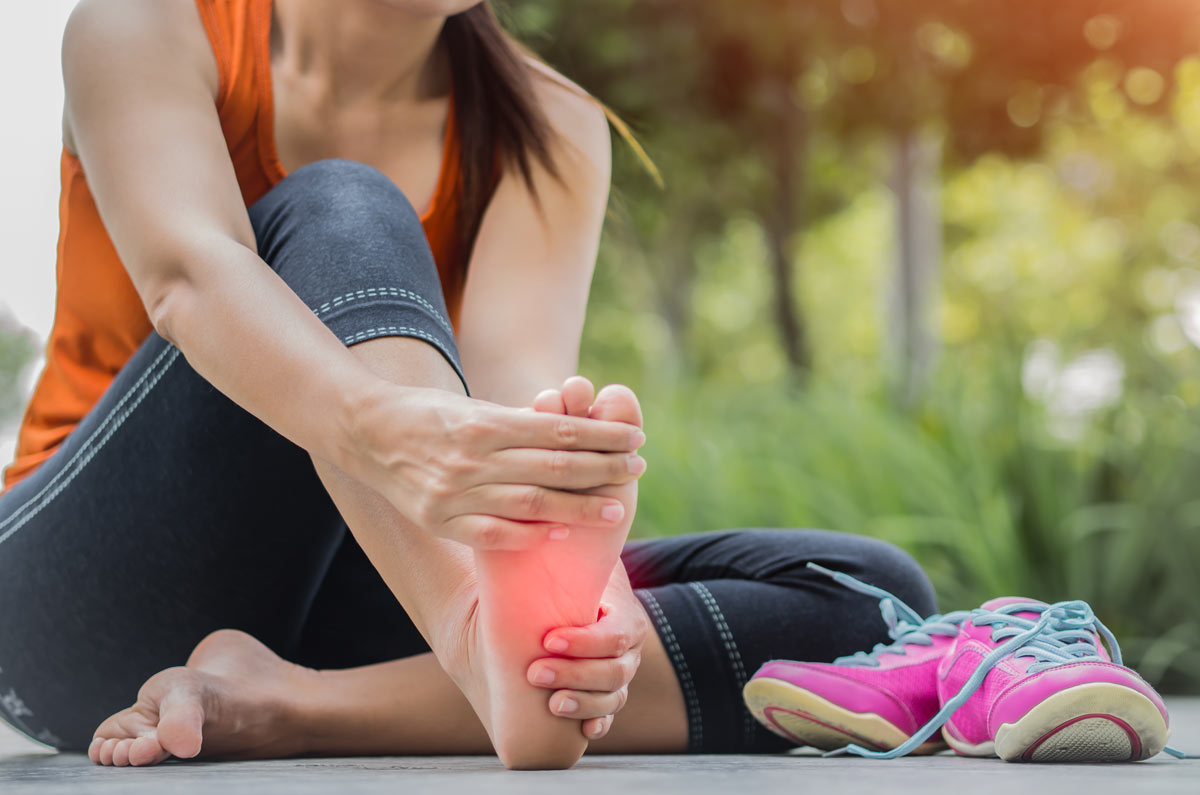
Your health care clinician has suggested you have a cortisone injection into your foot. As with any medical procedure, both of you are best advised to discuss the benefits and risks before proceeding. It helps to know what cortisone is, what it does, and why it’s been offered to you.

Cortisone is an anti-inflammatory medication that’s often used to treat musculoskeletal conditions. It’s a synthetic version of cortisol, a hormone that naturally occurs in your body. Injected into the affected area, cortisone can lower inflammation and pain, remove fluid, and thin scar tissue or adhesions. So if your clinician diagnoses a musculoskeletal condition affecting your foot or ankle – such as arthritis, bursitis, neuroma, or tendinitis – a cortisone injection is commonly raised as an effective treatment option.

Cortisone injections also contain a local anaesthetic. For certain conditions an injection can be painful, so the anaesthetic may be injected separately before the cortisone to block this pain.

The clinician may or may not use ultrasound technology to guide the injection. For pain relief in the foot or ankle, research finds no statistically-significant difference between procedures conducted with or without ultrasound. Interestingly, trials on cadavers injected with dyed cortisone show how it rapidly spreads from the injection-point to adjacent tissue, indicating that pinpoint accuracy is not key to effectiveness.

There are several types of cortisone. In most cases the clinician will administer a long-duration cortisone, taking effect within 1-3 weeks, with benefits lasting between 1-9 months, depending on the condition and its severity. There’s a clinical consensus that no more than 3 injections should be administered to the same body-part within a 12-month period, though there’s no research literature to clearly support this belief.

After the injection, you can quickly return to most activities. The clinician may recommend you avoid strenuous physical exertion such as gym workouts or running for a few days, so the cortisone isn’t displaced from the target tissue.

As for risk-factors, there’s been research into whether the injection may risk tearing tendons in the target area. There’s no recorded case of this in human trials, though it has occurred in trials on dogs and horses. There were cases of more general tissue damage recorded in early trials on American gridiron players, but various factors could have produced this result – the needle used, the amount of fluid injected, and the subjects receiving multiple injections within a short period.

No medical procedure has a 100-percent success rate, but a single cortisone injection administered by a trained clinician is both safe and effective in providing medium-term pain relief. Side effects are minimal, and the benefit to your musculoskeletal condition is potentially vast. And for some foot-specific conditions – such as a neuroma (pinched nerve), or plantar fasciitis (heel pain due to scar tissue) – a cortisone injection can often be a cure.

Our guest blogger

Steven Edwards is a trainee foot and ankle surgeon with the Australasian College of Podiatric Surgeons. He also teaches pharmacology and foot surgery to undergraduate podiatry students at La Trobe University.


photo-1200x795.jpg
12/Sep/2019

The weather’s changing. You can smell the blossoms, the freesias and other spring flowers bursting into life. The days are getting longer. The sun’s shining and the temperature’s rising.

Hooray! I’m over winter. The time for hibernating is over. I just want to lose the winter woollies, say goodbye to soup and get out and about.

So I’ve made a list of all the things I want to do now that the weather is getting better. I’m going spring into spring! Here’s a few that may get you inspired:

  1. Get outdoors. We’re so lucky in Australia to have beautiful and accessible parks and gardens. Whether you’re into a gentle stroll, a brisk hike, a walk through history, or all of the above, there’s something there for you. A good place to start is the parks service website in your state or territory, your local council website, and the National Trust website.
  2. Try a new sport/exercise. If your exercise program has become boring, or you’re in a bit of an exercise rut, spring is the perfect time to blow off the cobwebs and try something new. Try trampolining, have a Frisbee tournament, learn to dance the samba/tango/tap/swing, borrow a bike and go for a ride, join a sporting team, go bird watching. The sky’s the limit. Just think about the types of things you enjoy doing, or sound fun to you, and incorporate them into your exercise program.
  3. Take part in a fun run/walk. This is the time of the year when fun runs and walks seem to happen every weekend. Find one that appeals to you – the location, the distance, the charity it supports – and sign yourself up. Even better sign up the family and friends as well!
  4. Volunteer your time and skills. Whether it’s something you do regularly or as a once off, volunteer work can be extremely rewarding for yourself and your community. Think about the types of things you’re passionate about, your skills, the amount of time you can give, and look around your local community to find the best match. Or visit the GoVolunteer website to search the database for volunteering opportunities.
  5. Grab your camera or phone and start snapping. It’s amazing the quality photos we can take on our phones. Post your pics on social media, and be inspired by others. Spring is the perfect time to get some gorgeous photos. And it’s amazing how differently you start seeing everyday things when you start imagining them through a camera lens. Things that once faded into the background become stunning architectural shapes, or vibrant vistas. Before you know it you’ll be experimenting with angles, perspective and light. If you need help, there’s plenty of tips and tricks online about taking photos with your phone. Or investigate photography courses in your local area. You’ll learn new skills and meet new people.
  6. Dig in the dirt. Many people find gardening a relaxing past-time, and it can distract us from our pain and our problems. So with our gardens coming alive, why not get out and get your hands dirty. Plant some bright flowers in pots or garden beds around the entrance to your house. Prune trees and shrubs and remove any dead winter growth. Add some mulch to the gardens beds. Then grab a cold drink, sit back and enjoy the fruits of your labours. Oh – and if you sometimes find your condition affects your ability to garden, check out this blog post.

More to explore

Photo by Maria Shanina on Unsplash.


my-goals-1200x800.jpg
09/Feb/2019

And stay focused and motivated

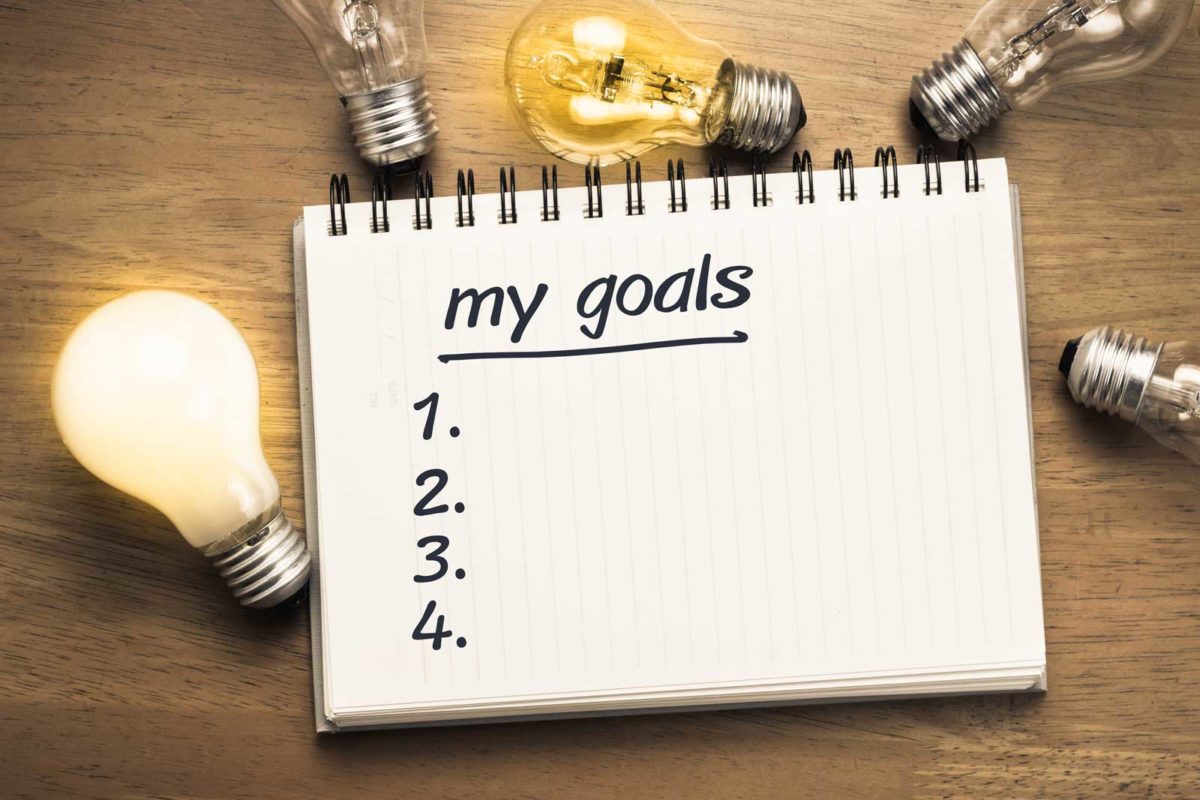
It’s important to have goals in life. Whether it’s a goal involving travel, a new career, financial security or a goal relating to your health and fitness, having a clear goal – or an endpoint – gives you something to aim for.

But if you find it hard setting goals, and putting in place the steps you need to achieve them, you’re not alone. Here are a few pointers for setting a goal. I’ve used a weight loss goal as an example:

Be as clear as possible about what it is that you want to achieve, and how you’ll do it.

A common acronym used for goal setting is SMART: Specific, Measurable, Achievable, Realistic and Time frame.

Be specific. What is it you’re aiming for? Ask yourself the 5 W’s – who, what, when, where, why. What do you want to accomplish? Why? Who will be involved to help you? When and where will you do this?

You need to be able to measure your goal so that you know when/if you’ve achieved it. Losing weight is not a measurable goal, but losing 5kgs in 8 weeks is. You’re able to track your weight loss and the time frame.

Your goal needs to be something that’s achievable for you. It should challenge you and stretch you a little, but should be something that’s attainable, e.g. losing 20kgs in 2 weeks isn’t achievable, however, losing 5kgs in 8 weeks is.

You need to be realistic – your goal needs to be doable – for you and for your own circumstances. Losing 5kgs in 8 weeks is realistic for you because you’ve discussed it with your doctor, you’re committed (you know it’ll help ease your pain), you’ve enrolled in a weight loss class for information and support and you’ve joined a water exercise class so that you can exercise without making your knees more painful.

Your goal should have a time frame. Losing weight someday is not a timed goal. Having a time frame, e.g. 8 weeks, gives you motivation and helps keep you on track.

Using the SMART system, write down your goal and the steps you need to get there. Stick it on your fridge, bathroom mirror or someplace you’ll see it often. Refer to it regularly. If you have any hiccups along the way, that’s okay, don’t give up. Just refer back to your goal and move on.

Now that you know how to set a goal, it’s time to think of one of your own. What is it that you want to do or achieve?

Remember to think SMART and you’ll get there in the end! Good luck.


musculoskeletal health australia

Musculoskeletal Health Australia (or MHA) is the consumer organisation working with, and advocating on behalf of, people with arthritis, osteoporosis, back pain, gout and over 150 other musculoskeletal conditions.

Useful Links


Copyright by Musculoskeletal Health Australia 2026. All rights reserved

ABN: 26 811 336 442ACN: 607 996 921