READ OUR BLOG


Psoriatic-Arthritis-1200x843.jpg

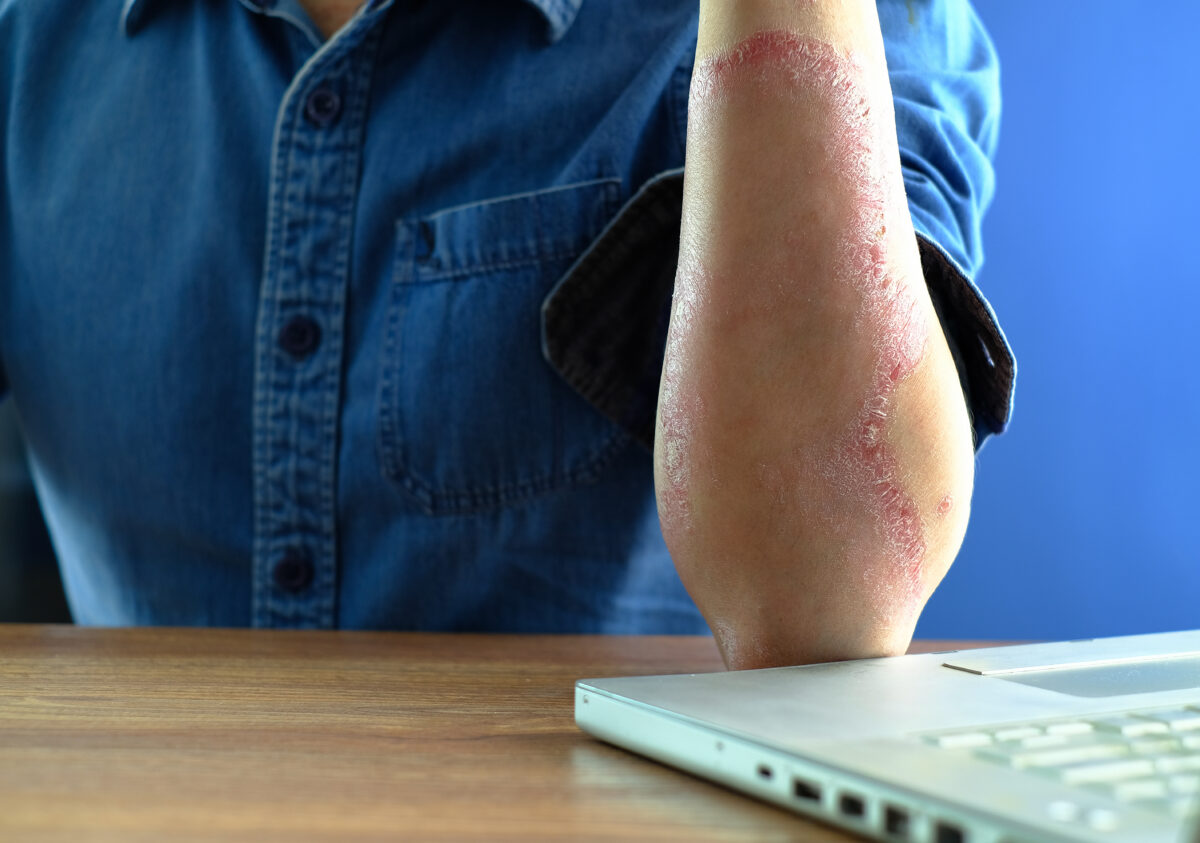
In this edition of Connected tISSUES we are shining a spotlight on the complex and often serious musculoskeletal condition, psoriatic arthritis (PsA). PsA is a condition that presents differently in different people. In simple terms, PsA causes pain and inflammation in the joints and is usually associated with the skin condition psoriasis (but it can occur without someone experiencing this…we told you it was complex!) 

Psoriatic arthritis can be challenging to recognise because of the varied ways it can present and because of overlapping symptoms with other conditions. This difficulty can sometimes lead to a delay in diagnosis and treatment. Our on-demand webinar Psoriatic Arthritis Diagnosis and Management by Dr Adam Rischin is a great resource for anyone seeking information on PsA, its symptoms, tests that can assist with diagnosis and effective treatment options. 

PsA can affect anyone. Our nurse recalls a 30-year-old male contacting the free Musculoskeletal Health Australia B.A.M. Helpline because he was struggling with the effects of his psoriatic arthritis. The impact this condition was having on his life was heartbreaking.  He was living with quite severe plaque psoriasis (plaques appear as raised, inflamed, and scaly patches of dry skin that may be itchy and painful). This young mans mental health, financial security, social, personal and professional life had also been negatively impacted by his condition. It was sad to learn that he had left his job due to the embarrassment he felt, embarrassment that was caused by a symptom of his condition (he was extremely conscious of the silvery flakes of skin he ‘was leaving’ on the chair at work and he didn’t want other people to have to sit on that after him). He was living with chronic pain due to the inflammation in his joints. His quality of life had been severely impacted and he was desperately looking for understanding, help and connection. 

Whilst there are a number of treatment options available to people living with PsA most recently a medication called Apremiast (OTEZLA) was added to the PBS. Apremiast is showing some positive results for plaque psoriasis which is good news as up to 30% of people with psoriasis will develop psoriatic arthritis. 

For more information on Psoriatic arthritis (PsA) go to the Musculoskeletal Health Australia website and download the PsA Information Sheet. For those living with PsA, make sure you access our self-care plan to help you understand, manage and live well with your condition, or call our helpline and speak to our nurse (Monday to Thursday 9am to 5pm) on 1800 263 265 or email helpline@muscha.org

Other sources of information on PsA:


Falls.png

Tips for preventing falls

The 80’s song ‘catch me I’m falling’ could have been my family anthem. We’re clumsy, uncoordinated, and with two left feet, always slipping, tripping, and falling. 😁

It‘s just the way we are. I’ve even gotten to the point of doing a ‘ta-da’ after a trip, extending my arms over my head like a gymnast at the end of a routine.😀

But now, as I’m getting older, it’s not so amusing. I’m conscious of the more serious repercussions of falling. In fact, just last week, I tripped over my cat, whacked the side of my head on the kitchen counter and broke my glasses. Fortunately, I wasn’t seriously injured. But it made me take stock, stop thinking about falls as something I have to put up with and start being more proactive in preventing them.

Because the good news is that falls aren’t inevitable. They can often be prevented, or at the least, any injuries that occur can be minimised.

Let’s start with some facts

Data from the Australian Institute of Health and Welfare shows that falls are Australia’s largest contributor to injuries that require a stay in hospital and are a leading cause of injury deaths.(1) More than half of the hospitalisations were due to broken bones – often hips, vertebrae and wrists.

Falls can happen anywhere and to anyone, but a fall that lands you in hospital is more common in older people and most likely to occur in the home.

The stats are alarming, and like me, you may think these were falls from a height or down stairs. But the truth is, ‘over half of all falls leading to hospitalisation occurred on a single-level surface (for example, by slipping), and only 7% of falls leading to hospitalisation involved stairs or steps.’(1) 😱

And if you have osteoporosis and your bones are already fragile, the risk of breaking a bone due to a fall is much greater.

So to avoid becoming one of these stats, we can’t see falls as an inevitable part of life and getting older. They’re a serious problem, and we all need to take steps to prevent them.

We know that falls can result in broken bones, but they can also cause:

  • Dislocated joints (e.g. shoulder)
  • Head injuries
  • Bruises, scrapes and sprains
  • A loss of confidence which can lead to restricting activities due to the fear of falling. For example, avoiding walks in the park or going into places that are unfamiliar, crowded or have stairs/steps due to fear of falls,

What causes people to fall?

Health issues

  • If you’ve fallen more than once in the past 6 months, you’re more likely to fall again.(2)
  • Medical conditions that lead to reduced strength and endurance (e.g. arthritis), loss of sensation (e.g. diabetic neuropathy), impaired balance (e.g. Parkinson’s disease) and cognitive impairment (e.g. dementia).
  • Medicine side effects, especially if you’re taking several medicines.
  • Poor eyesight and vision problems.
  • Incontinence. Rushing to the toilet can increase your risk of falling, especially at night.

The environment

  • Trip hazards in your home and the community, e.g. clutter, cords and cables, wet and/or slippery floors, uneven footpaths, and pets.
  • Poor lighting.
  • Inappropriate or ill-fitting footwear and clothing.

Reducing your risk

Falls are usually caused by a combination of factors. Changing some of these factors can lower your chances of falling. Or, if you do fall, reduce your risk of serious injury.

Exercise regularly

Australian physical activity and exercise guidelines recommend that all adults be active most days, preferably every day, for 30 minutes or more. Exercise is vital for good health, maintaining independence, and lowering your risk of falls and fall-related injuries. Physical activity helps to maintain and improve your mobility, strength, posture, coordination, balance and flexibility.

People with better posture, better balance and stronger muscles are less likely to fall or be injured. On the other hand, people who aren’t very active are more likely to fall and be injured than those who are more active.

Talk with your doctor, physiotherapist or exercise physiologist for information and advice about how you can safely become more active.

And read Exercise for preventing falls by The Royal Australian College of General Practitioners for more info.

Look after your health

  • Talk with your doctor about your medicines. Some medicines can help reduce falls, such as pain-relievers that decrease your pain and allow you to move more comfortably and be more active. However, some medicines or combinations of medicines can cause dizziness, drowsiness or confusion, which increases your risk of falling. Understanding your medicines and how they affect you is an important strategy for reducing this risk.
  • Eat a healthy, balanced diet with regular meals throughout the day to avoid feeling lightheaded, weak or dizzy. Stay hydrated and drink plenty of water each day.
  • Limit alcohol intake as it can affect your balance and coordination and increase your risk of falling.
  • Have your eyes tested regularly by an optometrist. If you wear glasses, keep them clean. If you have different glasses for different situations, e.g. reading or distance glasses, make sure you use the appropriate ones for the task. Be careful when going up and down stairs if you wear multifocals.
  • Wear sunglasses outside to minimise glare and squinting and to protect your eyes from UV damage.
  • When moving from a light to a dark space, or vice versa, allow time for your eyes to adjust.
  • See a podiatrist if you have problems with your feet that affect your balance or how you walk; for example, pins and needles, pain, swelling, or poor circulation. They can help you address these issues. They can also give you advice about appropriate footwear.
  • Take time to regain your balance after lying down or standing up after sitting.

Move around safely

  • If you’re unsteady on your feet or have painful feet, hips or knees, you may need some support to get around. A physiotherapist or occupational therapist can help you decide if a mobility aid (e.g. a walking stick or walker) is appropriate for you. They’ll also help you learn how to use it correctly and adjust it to your requirements.
  • Plan your outings to fit how you’re feeling. For example, if you’re at the shopping centre and feel tired or your feet begin to hurt, you might need to sit and rest for a while. Or, avoid going for a long walk if you’re having a day when your pain and fatigue levels are high. Take a shorter walk instead.
  • Be aware of the weather and how it can affect your environment. For example, footpaths are often slippery when wet, especially if there are wet leaves on them. Or, on sunny days, sun glare can make visibility more difficult, and you may not be able to see as clearly as usual.

Choose your clothing and footwear carefully

  • Avoid long trousers or skirts that may get caught underfoot or on furniture.
  • Wear well-fitting, supportive shoes with non-slip soles. Avoid high heels, floppy slippers, shoes with slick soles, and walking around in your socks.
  • Hip protectors may be an option for people with osteoporosis or those who fall often. They’re plastic shields or foam pads that fit into the pockets of specially designed underwear and reduce hip fractures from a fall. Your doctor can give you more information about hip protectors.

Reduce the hazards in your home

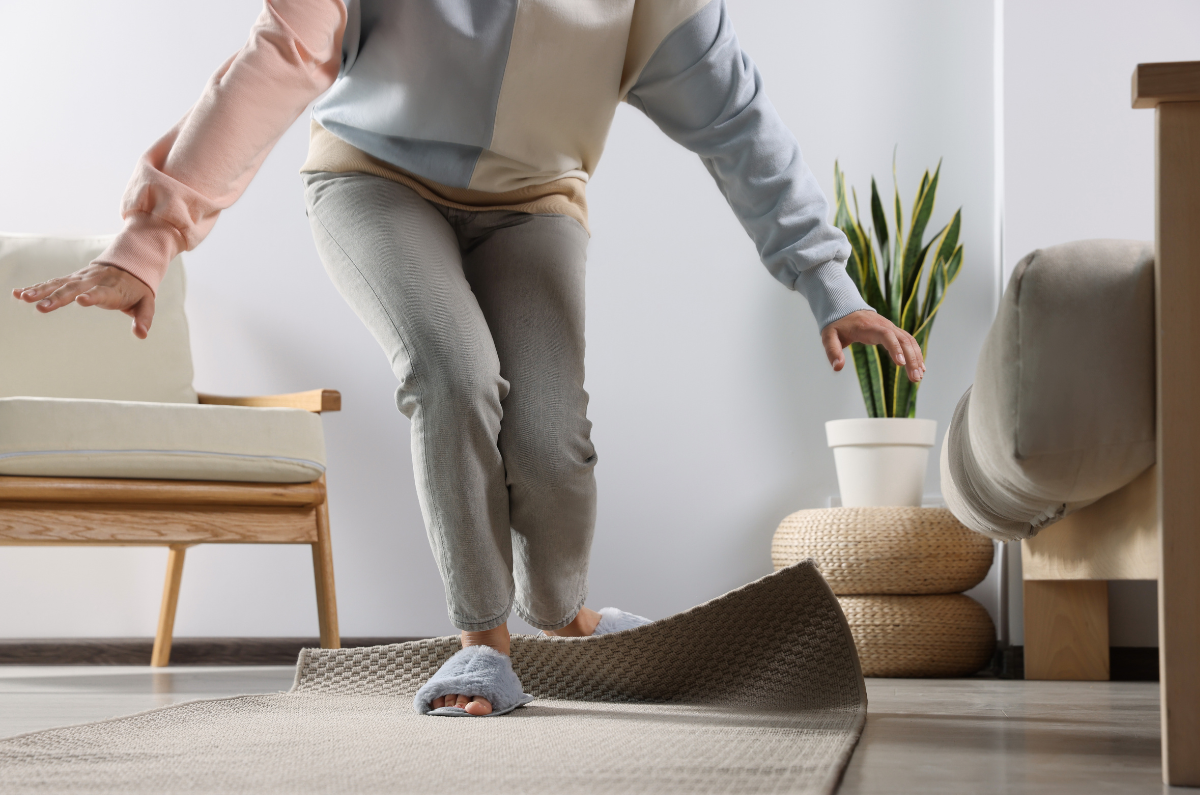
  • Make sure mats, rugs and carpet edges are lying flat on the ground and well secured. If they’re loose or curled up, they can cause you to trip.
  • Clean up spills from the floor immediately. If you have balance issues and bending over is a problem, ask someone else to clean the floor or use a light mop.
  • Ensure your walkways are clear of clutter, and you have plenty of space to walk between furniture without anything getting in your way.
  • Remove cords and cables from walkways. Secure them to skirting boards or close to the wall.
  • Install non-slip mats in the bathroom.
  • Pets can be a trip hazard (as I learned the hard way), especially if they like to be close to you or it’s meal time. 😼 So be aware of where they are when you’re up and about. 🐶
  • Make sure your home is well-lit so you can always see where you’re going. If you get up in the night frequently to go to the toilet, make sure you have a bright bedside light or use a torch so you can see clearly. Motion sensor lights are also handy and can be plugged into power points on the way to the toilet.
  • Consider installing a handrail on at least one side of any stairs and next to baths, showers and toilets.
  • Safety strips on the edges of outdoor stairs are also a good idea. They provide additional grip and help you see exactly where the edge of the step is.

What to do if you fall

Sometimes, no matter how careful you are, you can still have a fall.

So if you have a fall, it’s important that you try not to panic (easier said than done 😑). And although your first reaction may be to get up quickly, especially if you’re in public, because you’re embarrassed (been there, done that), take a moment.

  • Assess the situation. Are you hurt? Is it safe to get up? Have you damaged your glasses? Or lost your walking stick?
  • Make a decision whether or not to try to get up. Factoring into your decision will be whether you’re safe where you are, e.g. have you fallen onto a footpath or the road?

If you can get up:

  • Take time to recover. Sit and let yourself get over the shock. Drink some water. Take stock of your injuries.
  • Tell someone you’ve had a fall and/or seek medical advice. Don’t just brush it off. Falls can signify that something’s wrong – e.g. medicine side effects, balance problems, or a new health issue.

If you can’t get up:

  • Try sliding or crawling to seek help.
  • Use your phone or personal alarm, call for help or make a loud noise to attract attention.
  • Make yourself as comfortable as possible until help arrives
  • Seek medical advice/or call an ambulance.

Services to help keep you safe

If you’ve done all you can to prevent falls and are still concerned about your risk, there are services available to help you.

  • Falls and balance clinics provide multidisciplinary assessment and management planning for people who’ve had falls and have mobility and balance problems. People receive information on making their homes safer and are referred to physiotherapy, occupational therapy, exercise classes and other allied health professionals. Talk with your doctor about whether this might be an option for you.
  • Personal alarms. There are two basic personal alarm options; a pendant you wear around your neck and a smartwatch worn on your wrist. Pressing the button on the alarm will trigger contact with the service company, who’ll then contact your nominated relative, friend, neighbour or a response service. Some people can access free or reduced-cost personal alarms through government schemes such as the Commonwealth Home Support Program, National Disability Insurance Scheme (NDIS) and Department of Veterans’ Affairs. Visit their websites or speak with your doctor to see if you’re eligible. A variety of private companies provide this service for a fee if you don’t qualify for the free service.
  • Red Cross Telecross is a free service offered by the Australian Red Cross. It aims to provide people who live alone and are at risk of illness or accident the peace of mind that someone is looking out for them. Each morning, every day of the year, trained volunteers make a short call to people’s homes. If the call goes unanswered, Red Cross will take action to make sure that the person is OK. For information about accessing Telecross, call Red Cross on 1300 885 698.

Contact our free national Help Line

Call our nurses if you have questions about managing your painmusculoskeletal condition, treatment options, mental health issuestelehealth, or accessing services. They’re available Monday to Thursday between 9am-5pm on 1800 263 265; email (helpline@muscha.org) or via Messenger.

More to explore

References

(1) Falls, Australian Institute of Health and Welfare, 2022.
(2) Falls and the elderly, healthdirect, 2020.


Originally written and published by Lisa Bywaters 2022.


NHMRC-1.png

Budget-friendly tips for staying warm this winter

Sadly winter is more than just lazy Sundays when you can stay at home, warm on the couch with a loved one. Reality means we need to eventually (and reluctantly) head out of our cosy homes and face the cold, wet winter. And when we’re at home, because of crazy energy prices and rising living costs, we have to make hard decisions about how to spend the household budget. Heating is one of the more significant costs in winter, so many people are forced to reduce it to save money.

For those of us with conditions like  fibromyalgialupusosteoarthritisrheumatoid arthritisback pain, scleroderma, and Raynauds’ phenomenon, this can be a painful problem. We often feel the cold more keenly with increased joint and muscle pain or lack of blood circulation to the extremities.

So, how can you stay warm and keep the costs down this winter? We’ve got some suggestions for you to try.

Dress for the weather.

Let’s start with the basics. You need to dress for the temperature and wear layers. It can sometimes feel cumbersome and bulky, but it’s one of our best defenses against the cold. So put on the warm pants and jumper, embrace your inner Wiggle and wear a skivvy, pull on your thick socks and/or tights and appropriate footwear. If you’re still cold, consider adding thermals to your layers.

When you head outdoors, add more layers – including a coat, hat, gloves, and scarf. You can also buy a fantastic range of heated vests, socks, scarves, and gloves. They can be a little pricey, but they may be worth that initial outlay if you’re outdoors a lot. Check online or in-store at outdoor suppliers.

If you’re at home and still feeling the cold, grab a blanket for your legs as you sit at your desk or on the couch. You can use any warm blanket, doona or heated throw. Whatever you choose, just be careful you don’t trip on it when you get up.

Shop around.

Don’t assume you’re on the best energy plans for your gas and electricity. Take some time to see if there’s a better deal. If you live in Victoria, visit Victorian Energy Compare. For all other parts of Australia, visit Energy Made Easy.

Deal with draughts.

When the wind’s howling outside, you know it’s trying to find a way indoors 💨. So cover the bottom of your door with a door snake or an old towel, or add some door seals. Pull your curtains and blinds over the windows at night and during miserable days to keep the warmth inside. If you have floorboards, consider putting down rugs (just be careful they don’t become a trip hazard).

If you can safely do so, close or cover air-conditioning vents, exhaust fans, and unused chimneys. However, it’s important to be aware that some gas appliances require a certain amount of ventilation or fresh air, or they can be unsafe. They should also be serviced every two years or sooner if you notice anything unusual. If in doubt, speak with a licensed gas fitter. Energy Safe Victoria has lots of useful info about heating your home with gas and what to look for when searching for a licensed gas fitter.

Sustainability Victoria also has helpful information on draught-proofing your home. You can also watch these handy DIY draught-proofing videos from the City of Port Phillip (Melbourne).

Turn down the temperature.

While it’s tempting to crank the heat up, the most efficient temperature to set your heater to (if you can select the temp) is 18-20 degrees. While that may not sound particularly warm, we’re often outside during the warmer months wearing short sleeves when it’s 18-20 degrees. It’s just a matter of perspective.

And only heat the areas you’re using. If you can turn the heating off in unused parts of your home, do it. Shut the doors and use a draught stopper to prevent the warm air from the rest of the house from escaping into these areas. And turn the heating off when you go to bed or leave home.

Install heavy curtains.

Thick curtains made from heavyweight, tightly woven fabrics can prevent heat from escaping your home. For the best results, curtains should be fitted as close to the window frame as possible, extend below the sill and well over the sides of the window frame, and a pelmet fitted over the top. This acts to seal the window from the rest of the room and prevent heat loss. Curtains will also keep the hot air outside in summer.

Let the sun shine in.

Open your curtains and blinds on sunny days to let the sun shine on your windows. Even with a chilly wind, the sun will bring wonderful warmth into your home.

And remember to close them when the sun starts to go down. As someone who goes for walks when it’s dark in the early morning and evening, I’m always amazed by how many people have their windows uncovered. You can practically see the heat escaping through the glass. So close them to keep the warmth in and the gaze of the sticky-noses (like me) out 😉.

Cool down at night.

You sleep better when your body can cool down, so turn the heater off at night. It’s also safer to sleep with the heater off. You can remove the chill from your bed using a hot water bottle or an electric blanket. Just remember to turn your electric blanket off before sleeping.

Winter-proof your bed.

There’s nothing like slipping into a deliciously warm bed on a cold night, especially if there’s soft flannelette involved! So swap out your lighter, everyday bedding for heavier winter ones. And add layers – a top sheet (if you don’t already use one) and extra blankets. Finally, if you have floorboards in your bedroom, adding a rug under your bed can prevent draughts from making their way to your bed.

Get active.

When the weather allows, go for a brisk walk outdoors, wearing appropriate clothing, and you’ll warm up in no time. Save on pricey petrol and walk to the shop/school/post office instead of driving.

When you’re at home, exercise indoors using an online program, a DVD or an app. Play with the kids. Clean the house. Do anything that gets you moving, and you’ll feel warmer than if you sit in one place for hours.

However, if you’re having a flare or experiencing a lot of pain, be as active as you can within your limits. And use your heat packs to help relieve muscular pain.

Shorten your showers (if you can).

Many of us use our shower to warm up sore joints and muscles so we can get moving. However, hot water uses a lot of energy; even a few extra minutes will add to your bill. If you can, shorten the time you spend in the shower. Aim for four minutes or less. You can use a timer or sing your favourite song. Hunter Water has a great playlist of four-minute(ish) songs to get you inspired.

Give your heater some space.

Anything that blocks a heater will prevent the warm air from flowing around the room uninterrupted. So move clotheshorses and other obstructions away from the heat source.

Hot air rises, so if you have ceiling fans, flick the reverse or winter mode switch and turn the fan on low. This will pull the cooler air towards the ceiling and push the warmer air down to you.

And to stay safe, fire authorities say you should keep clothing and other fabrics at least one metre from your heater. Never place them on heaters.

Snuggle up.

Get comfy on the couch with your partner, kids, and pets. Grab a warm blanket or doona, share your body heat, and enjoy being together.

Use heat packs and hot water bottles.

If you’re feeling stiff and sore, heat packs or hot water bottles can provide temporary pain relief and help you get moving. But you need to be careful when using them.

If you’re using a heat pack or wheat bag, let it cool completely before you reheat it. Don’t sleep with your wheat bag or smother it behind you in your chair or bed. This can cause it to overheat and catch fire. Always carefully follow the manufacturer’s instructions and never overheat them in the microwave.

If you’re using a hot water bottle, use hot water from the tap, not boiling water. Wrap it in a cloth or use a cover so it doesn’t come into contact with your skin.

Always examine your hot water bottles and heat packs before use, and toss them out if you notice signs of wear or damage. And always check their temperature before use to ensure they’re not too hot.

Warm up from the inside out.

Many delicious winter recipes bring comfort and warmth on the most miserable days. So crack open the cookbooks and get cooking! Or go online for inspiration for yummy, warming curries, soups and stews. We’ve got some great recipes to get you started! Can’t be bothered cooking? Simple. Grab a cup of hot chocolate, tea or coffee. It’ll warm your insides and your hands. Perfect! ☕🍵

Choose energy-efficient heaters and hot water systems.

If you’re in the market for a new heater or hot water system, make sure you’re buying one that’s energy-efficient and best suits your needs. Read Canstar’s guide to energy-efficient heaters and Choice’s article on buying the best hot water system for more info.

Insulate.

Insulation keeps your home warm in winter and cool in summer by preventing heat from escaping or entering your home. This keeps your home at a more consistent temperature and reduces the need to crank up your heating or cooling.

If your home isn’t properly insulated, this is something you can do that’ll have long-term benefits. There’s a substantial upfront cost, but it may be an option for some households. Find out more about insulation, including the different types available and how to install it, from the Australian Government’s website, Your home.

Billing and payment help.

If you’re struggling to pay your energy bills, Energy.gov.au also has some information about support for Australian households, including info on potential rebates that may be available.

We’ve also put together lots of info to help you if you’re struggling with financial stress.

Contact our free Helpline

Call our nurses if you have questions about managing your painmusculoskeletal condition, treatment options, mental health issuestelehealth, or accessing services. They’re available Monday to Thursda between 9am-5pm on 1800 263 265; email (helpline@muscha.org) or via Messenger.

More to explore


7-sleep-tips.png

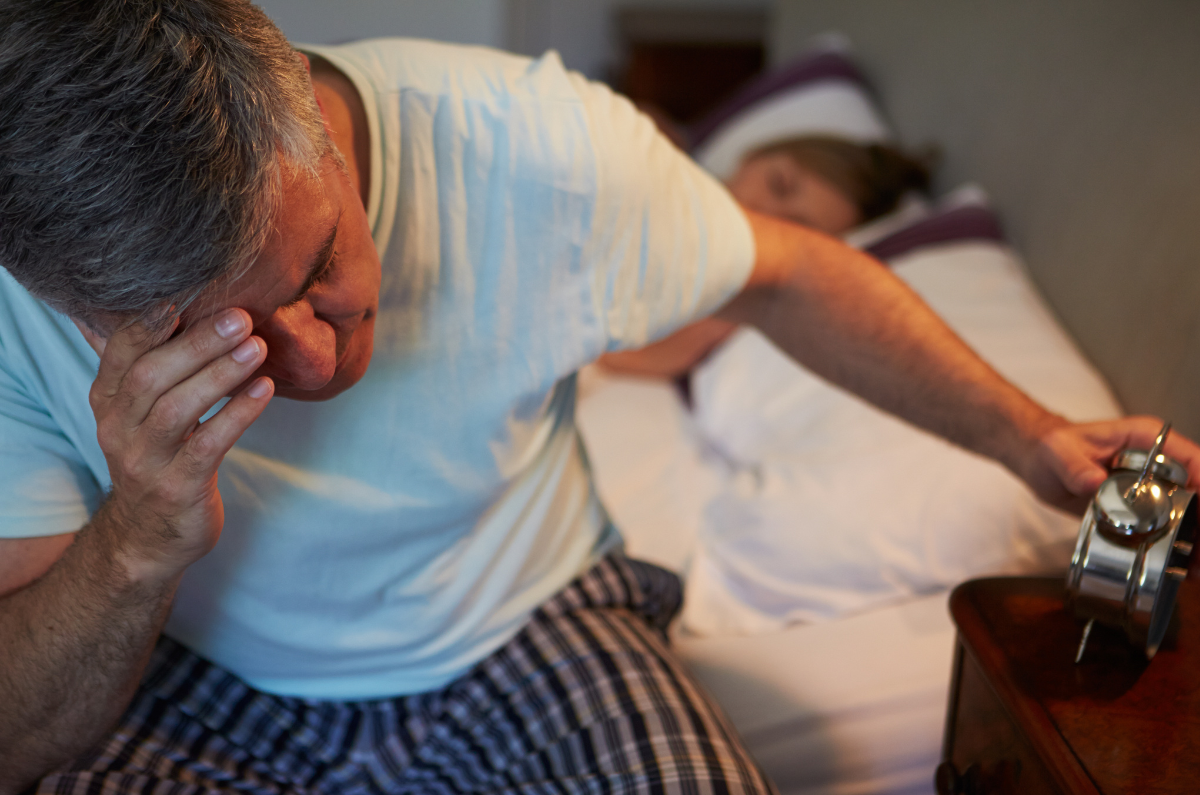
You know what it’s like. It’s 3.00am and you’ve just woken up. Again. You glance at your clock and do the maths – only 4 hours until it’s time to get up. This is really taking a toll on you – your mood, your performance at work, and your pain levels.

So what can you do?

  1. Avoid using technology in bed. The blue light from laptops, tablets and smartphones suppresses the hormone melatonin, which makes us sleepy at night. So be sure to stop screen use at least one hour before bed.
  2. Get out of bed. Don’t lie in bed tossing and turning. Have a warm drink (e.g. milk, no caffeine), do some gentle stretches or breathing exercises and go back to bed when you feel more comfortable.
  3. Develop a sleep routine. There’s a reason we do this with babies and small children – it works! As often as possible, go to bed and get up at the same time each day. Your body will become used to this routine and you’ll find it’s easier to fall asleep and stay asleep.
  4. Don’t look at the clock. Constantly checking the time can make you anxious, which makes it hard to sleep. Try removing your clock from the bedside, or cover it up at night.
  5. Try some relaxation techniques. There are as many ways to relax as there are stars in the night sky (well, almost) so there’s bound to be something that suits you. Consider trying mindfulness, visualisation, deep breathing or a warm bath before bed. These techniques will help you become more relaxed and may help you manage your pain better so that when you go to sleep, you sleep well.
  6. Be active during the day. As well as the many other benefits of regular exercise, it’ll help you fall asleep and stay asleep longer.
  7. Seek help. If pain is constantly keeping you awake at night, talk with your doctor about other things you can do to manage your pain and get some decent sleep.

And check out our A-Z guide to managing pain. It’s full of tips and strategies to help you manage your pain.

First written and published by Lisa Bywaters in June 2018


neck-pain.png

Neck pain is a common problem many of us will experience at least once in our lives. The good news is that most cases of neck pain get better within a few days.

So what is neck pain? What causes it, and how can you manage it and get on with life?

Let’s start with a look at your spine

It helps to know how your spine works to understand some of the potential causes of neck pain.

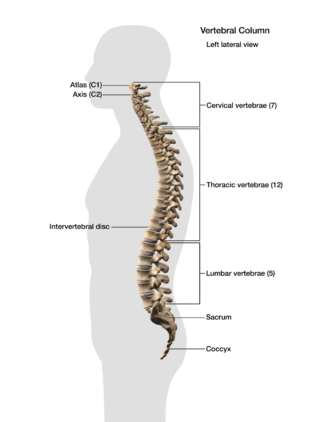
Your spine (or backbone) is made up of bones called vertebrae, stacked on top of each other to form a loose ‘S’-shaped column.

Your spinal cord transports messages to and from your brain and the rest of your body. It passes through a hole in each of the vertebrae, where it’s protected from damage. It runs through the length of your spinal column.

Each vertebra is cushioned by spongy tissue called intervertebral discs. These discs act as shock absorbers. Vertebrae are joined together by small joints (facet joints), which allow the vertebrae to slide against each other, enabling you to twist and turn. Tough, flexible bands of soft tissue (ligaments) also hold the spine in position.

Layers of muscle provide structural support and help you move. They’re joined to bone by strong tissue (tendons).

Your spine is divided into five sections: 7 cervical or neck vertebrae, 12 thoracic vertebrae, 5 lumbar vertebrae, 5 fused vertebrae in your sacrum and 4 fused vertebrae in your tailbone (or coccyx) at the base of your spine.

So what’s causing the pain?

It’s important to know that most people with neck pain don’t have any significant damage to their spine. The pain they’re experiencing often comes from the soft tissues such as muscles and ligaments.

Some common causes of neck pain are:

  • muscle strain or tension – caused by things such as poor posture for long periods (e.g. hunching over while using a computer/smartphone or while reading), poor neck support while sleeping, jerking or straining your neck during exercise or work activities, anxiety and stress.
  • cervical spondylosis – this arthritis of the neck is related to ageing. As you age, your intervertebral discs lose moisture and some of their cushioning effect. The space between your vertebrae becomes narrower, and your vertebrae may begin to rub together. Your body tries to repair this damage by creating bony growths (bone spurs). Most people with this condition don’t have any symptoms; however, when they do occur, the most common symptoms are neck pain and stiffness. Some people may experience other symptoms such as tingling or numbness in their arms and legs if bone spurs press against nerves. There can also be a narrowing of the spinal canal (stenosis).
  • other musculoskeletal conditions such as osteoarthritis, rheumatoid arthritis, fibromyalgia, osteoporosis.
  • herniated disc (also called a slipped or ruptured disc). This occurs when the tough outside layer of a disc tears or ruptures, and the soft jelly-like inside bulges out and presses on the nerves in your spine.
  • whiplash – this is a form of neck sprain caused when the neck is suddenly whipped backward and then forward. This stretches the neck muscles and ligaments more than normal, causing a sprain. Whiplash most commonly occurs following a car accident and may occur days after the accident.

Symptoms

The symptoms you experience will depend on what’s causing your neck pain but may include:

  • pain and/or stiffness in the neck and shoulders
  • pain when moving
  • difficulty turning your head
  • headache.

In most cases, neck pain goes away in a few days. But if your pain doesn’t get better, or you develop other symptoms, you should see your doctor.

Or you can answer a few questions in the neck pain and stiffness symptom checker by healthdirect to find out if you need medical care. Simply click on ‘N’ and select ‘neck pain and stiffness’.

Seeing your doctor

If you need to see your doctor because of your neck pain, you can expect a discussion about potential causes or triggers of your pain, whether you’ve had neck pain before, things that make your pain worse, things that make it better. Your doctor will also conduct a thorough physical exam.

This discussion and examination by your doctor will decide whether more investigations (e.g. x-rays, CT or MRI scans) are appropriate for you. However, these tests are generally unhelpful to find a cause of the pain unless there’s an obvious injury or problem (e.g. following an accident or fall). It‘s also important to know that many investigations show ‘changes’ to your spine that represent the normal passage of time, not damage to your spine.

Often it’s not possible to find a cause for neck pain. However, it’s good to know that you can still treat it effectively without knowing the cause.

For more information about questions to ask your doctor before getting any test, treatment or procedure, visit the Choosing Wisely Australia website.

Dealing with neck pain

Most cases of neck pain will get better within a few days without you needing to see your doctor. During this time, try to keep active and carry on with your normal activities as much as possible.

The following may help relieve your symptoms and speed up your recovery:

Use heat or coldthey can help relieve pain and stiffness. Some people prefer heat (e.g. heat packs, heat rubs, warm shower, hot water bottle), others prefer cold (e.g. ice packs, a bag of frozen peas, cold gels). Always wrap them in a towel or cloth to help protect your skin from burns and tissue damage. Don’t use for longer than 10 to 15 minutes at a time, and wait for your skin temperature to return to normal before reapplying.

Rest (temporarily) and then move. When you first develop neck pain, you might find it helps to rest your neck, but don’t rest it for too long. Too much rest can stiffen your neck muscles and make your pain last longer. Try gentle exercises and stretches to loosen the muscles and ligaments as soon as possible. If in doubt, talk with your doctor.

Sleep on a low, firm pillow – too many pillows will cause your neck to bend unnaturally, and pillows that are too soft won’t provide your neck with adequate support.

Be aware of your posture – poor posture for extended periods, for example, bent over your smartphone, can cause neck pain or worsen existing pain. This puts stress on your neck muscles and makes them work harder than they need to. So whether you’re standing or sitting, make a conscious effort to be aware of your posture and adjust it if necessary, or do some gentle stretches.

Massage your pain awaymassage can help you deal with your physical pain, and it also helps relieve stress and muscle tension. You can give yourself a massage, see a qualified therapist or ask a family member or friend to give you a gentle massage.

Take time to relax – try some relaxation exercises (e.g. mindfulness, visualisation, progressive muscle relaxation) to help reduce muscle tension in your neck and shoulders.

Try an anti-inflammatory or analgesic cream or gel – they may provide temporary pain relief. Talk with your doctor or pharmacist for advice.

Use medication for temporary pain relief – always follow the instructions and talk to your doctor about alternatives if you find they don’t help.

Treating ongoing neck pain

Sometimes neck pain lasts longer than a few days, and you may have ongoing neck pain. There are things you can do to manage this:

  • See your doctor if the pain is worse or if you have other symptoms in addition to your neck pain such as numbness, pins and needles, fever or any difficulty with your bladder or bowel.
  • See a physiotherapist or exercise physiologist – they can provide you with stretching and strengthening exercises to help relieve your neck pain and stiffness.
  • Injections – some people with persistent neck pain may benefit from a long-acting steroid injection into the affected area. Talk with your doctor about whether this is right for you.
  • Surgery – is rarely needed for neck pain. However, it may be required in cases where severe pain interferes with daily activities, or the spinal cord or nerves are affected.

(Originally written and published by Lisa Bywaters 2022)

Contact our free national Help Line

If you have questions about managing your pain, your musculoskeletal condition, treatment options, mental health issues, COVID-19, telehealth, or accessing services be sure to call our nurses. They’re available weekdays between 9am-5pm on 1800 263 265; email (helpline@msk.org.au) or via Messenger.

More to explore


shoulder-pain.jpg

I’ve never really thought about my shoulders. They’re just there. Useful for hanging a handbag on or supporting a heat pack for my neck. I only really notice them when, graceful person that I am 😉, I bash one on a door frame.

That was until a few years ago when I slipped in the bathroom and fell hard on my arm, with my shoulder in an unnatural position. I was suddenly very keenly aware of my shoulder! I honestly thought I’d broken it. Fortunately, scans revealed nothing had broken, but I had injured the soft tissues.

However, it was during that time I learned about shoulders. I know, I know, the crazy fun times never end for me 😂. But in my defence, I was stuck on the couch for a few days with my arm in a sling and an ice pack on constant rotation. So I didn’t really have a lot going on.

And what I learned was fascinating.

And since shoulder pain is incredibly common, I thought I’d share what I learned with you. Because if you haven’t had shoulder pain, you probably know someone who has. So buckle up, and let’s learn about shoulders, shoulder pain and how to treat it.

Let’s start with the basics – how your shoulders work.

DYK, the shoulder has not one, but four joints???

This makes them complex, flexible structures with a large range of movement. Unfortunately, this flexibility can also put the shoulder at risk of injury and dislocation, especially through contact sports and falls.

Your shoulder is made up of three bones: the shoulder blade (scapula), collarbone (clavicle), and upper arm bone (humerus).

The main joint is the glenohumeral joint. This is where your humerus connects with your scapula. Like the hip, it’s a ball and socket joint. The top of your humerus is shaped like a ball and fits inside the socket or cup-shaped indentation in your shoulder blade. However, this socket is shallow, giving your shoulder great flexibility but also making it less stable.

The other joints are:

  • the acromioclavicular joint – where the top of your shoulder blade (acromion) meets your collarbone
  • the sternoclavicular joint – where your collarbone meets your breastbone (sternum) near the base of your neck
  • and the scapulothoracic joint – where your shoulder blade meets the chest wall (thorax). It allows your shoulder blade to move smoothly over your ribs.

Soft tissues surround the glenohumeral joint to form a capsule. This keeps the head of the arm bone in place in the joint socket. The joint capsule is lined with a synovial membrane that produces synovial fluid to lubricate and nourish the joint. Tendons, ligaments, bursa, and muscles also support the joints and bones in your shoulder to stabilise it and allow it to move freely. The bones, joints and soft tissue work together to make your shoulders incredibly mobile, so you can do all kinds of things like throw a ball, hug a friend, brush your hair, and scratch your back.

When things go wrong – shoulder pain.

Shoulder pain may come on quickly, e.g. if you injure yourself, or it can occur more gradually. It can be mild pain or, as I experienced, very painful 😥.

There are many causes of shoulder pain, not all due to problems with the shoulder joints or associated structures. They include:

  • Other musculoskeletal conditions, such as rheumatoid arthritis, osteoarthritis, and polymyalgia rheumatica can affect the shoulder, causing pain.
  • Inflammation or injury to the soft tissues (e.g. muscles, bursae, tendons, ligaments) in and around the shoulder, for example, bursitis and frozen shoulder.
  • Ongoing stress or anxiety that causes your muscles to remain tense.
  • Neck and upper back joint and nerve problems can cause pain to be felt in and around the shoulder.
  • Referred pain. Shoulder pain may also be caused by problems affecting your abdomen (e.g. gallstones), heart (e.g. heart attack) and lungs (e.g. pneumonia).

Note: if you feel shoulder pain radiating down your arm or you’re experiencing a tight feeling across the chest and shortness of breath, dial 000 immediately.

Symptoms of shoulder pain.

Unsurprisingly, the main symptom of shoulder pain is pain! Other symptoms include:

  • Reduced movement, stiffness and pain when moving your shoulder.
  • Weakness of the shoulder/upper arm.
  • Pain when lying or putting pressure on the affected shoulder.
  • Pins and needles (tingling). This is more likely to be associated with neck problems than the shoulder itself.

Diagnosing shoulder pain.

If you have shoulder pain that’s causing you distress or affecting your ability to do your daily activities, you should see your doctor. Your doctor will:

  • ask you questions about your shoulder pain, including potential causes (e.g. recent injuries, other health conditions), if you’ve had shoulder pain before, and how it affects you
  • ask about any other symptoms or health issues you have
  • do a thorough physical examination.

From this, they can work out the likelihood of particular structures in the shoulder being involved.

Sometimes they’ll suggest that scans are needed. They may include X-rays, ultrasounds, computed tomography (CT), or magnetic resonance imaging (MRI). The type of scan/s required will depend on the suspected cause of your shoulder pain. However, it’s important to know that many scans show changes to your shoulder that will likely represent the normal passage of time (even by age 45), not damage to your shoulder.

Treating shoulder pain.

Treating shoulder pain begins with understanding the cause of the problem. What works for one shoulder issue may not work for another. Your doctor will create a treatment plan based on your diagnosis.

The following are some commonly used treatments for shoulder pain.

  • Heat and cold packs may provide temporary relief from pain and stiffness. Generally speaking, heat can relieve muscle spasms and tension. Cold can reduce swelling.
  • Physiotherapy will aim to fix problems such as shoulder, neck and upper arm stiffness and weakness. A physiotherapist will provide exercises to help improve mobility and the range of movement for your shoulder. They’ll also help you modify movements and activities that worsen your pain. This often includes learning new ways to do things related to your work, sport, or everyday activities that aggravate your shoulder. They may also tape your shoulder and show you how to use taping to support your shoulder and reduce stress on it.
  • Occupational therapy. If your shoulder pain makes everyday activities difficult, seeing an occupational therapist (OT) may be helpful. They can help you learn better ways to carry out activities such as bathing, dressing, working or driving. They can also provide aids and equipment to make everyday activities easier.
  • Medicines may help reduce the pain you’re experiencing while you work to maintain and restore movement and function. But it’s important to understand they’re not a long-term solution to shoulder pain. Talk with your doctor or pharmacist for advice about pain medicines. There are different types available, both over-the-counter and by prescription. They include:
    • Non-steroidal anti-inflammatory drugs (NSAIDs). NSAIDs reduce inflammation and pain but have side effects, so using the lowest dose for the shortest period is best.
    • Topicals. Rubs, gels, ointments, sprays, patches and creams applied to your skin (topically) can provide temporary pain relief.
    • Corticosteroid injection. If you have persistent shoulder pain and haven’t had relief from oral medicines or other treatments, your doctor may suggest a corticosteroid (steroid) injection. Corticosteroid injections into the joint can reduce inflammation and provide short-term pain relief for some people. However, pain relief varies and may last a few days to weeks. The number of injections you can have is limited due to potential harm. Discuss the benefits and risks of steroid injections with your doctor.
  • In cases of a frozen shoulder, hydrodilatation may be recommended. This is an injection of fluid (saline and a steroid) into the joint. There’s some evidence that it may relieve symptoms and improve range of motion. However, it’s unclear if this is due to the hydrodilatation, the steroid in the injection, shoulder exercises, or a combination.

What about surgery?

For most people, shoulder pain will improve over time with appropriate, conservative treatment. However, in some cases, surgery may be required.

When considering surgery, you should be informed about what it involves, the rehabilitation process, and its potential benefits and risks.

Managing shoulder pain to prevent future problems.

Most people with shoulder pain will find it gets better over time. But there are things you can do to proactively prevent future problems.

  • Learn more about your shoulder pain. Are there activities or jobs that trigger your shoulder pain or make it worse? Knowing as much as possible about your shoulder pain means that you can make informed decisions about your healthcare and actively manage it.
  • Follow the advice of your healthcare team. The information, exercises, and modifications provided by your physio or occupational therapist during the worst of your shoulder pain will help prevent you from aggravating your shoulder and causing future issues.
  • Exercise regularly. Although you might think you need to protect your shoulder by not moving or resting it, it’s made for movement. And resting can make things worse. Regular exercise is vital for maintaining flexibility, muscle strength, and bone health. When starting an exercise program, you should incorporate activities that improve flexibility, muscle strength, balance, and overall fitness and endurance. Start exercising slowly and gradually increase the time and intensity of your exercise sessions over weeks and months. A physiotherapist or exercise physiologist can help you work out an exercise program right for you.
  • Manage your stress. Living with stress or anxiety can worsen your pain by causing the muscles throughout your body to tense or spasm. This is often felt in the shoulders and neck. There are many ways to reduce stress or anxiety, including exercise, massage, mindfulness, heat, breathing exercises, and guided imagery.
  • Get back to your normal activities. Try to be as active as possible and get on with your day-to-day life, including work and exercise. Returning to heavy manual jobs may take longer, and you may need support from a physio and/or OT.

Contact our free national Help Line

Call our nurses if you have questions about managing your painmusculoskeletal condition, treatment options, mental health issuestelehealth, or accessing services. They’re available weekdays between 9am-5pm on 1800 263 265, email (helpline@msk.org.au) or via Messenger.

More to explore


doctor_patient_consult-1200x800.jpg

Chronic (or persistent) pain is a common and complex problem affecting 1 in 5 Australians aged 45 and over.(1)

Dealing with chronic pain can be challenging. But there are many things you can do and resources available to help you manage. The first step starts with seeing your doctor.

Here are five reasons you should see your doctor about your pain.

1. You want to take control

Talk with your doctor about pain management programs if you want to learn about managing your pain more effectively. These programs are available in person and online.

Pain management programs aim to reduce the impact that pain has on your life. They treat you as a whole person and don’t focus solely on your pain. That means they address everything from exercise to mood, stress, goal setting, sleep, managing your activities, returning to work, and more.

By attending a pain management program, you’ll learn from doctors, physiotherapists, occupational therapists, nurses, and psychologists. They’ll provide information, advice and support to help you take control of your pain.

Talk with your doctor about whether a pain management program would be helpful.

2. You’re not coping with your pain

It’s important to talk with your doctor if you feel like you’re not coping, especially if:

  • you’re taking more of your medicines than prescribed
  • you’re mixing your medicines with other drugs, including alcohol
  • you’re drinking excessive amounts of alcohol
  • you’re having problems sleeping due to pain
  • you’ve been feeling very low for more than a few weeks
  • you’ve been missing work because of pain
  • you’re more worried, frustrated and irritable than usual.

Your doctor understands that living with pain is difficult. They can work with you to find the right pathway to help. They can also refer you to other health professionals, including physical and/or mental health specialists.

3. You’re struggling at work

If you’re not coping with your work responsibilities or just getting to and from work has become difficult because of your pain, discuss this with your doctor.

Evidence shows that working improves general health and wellbeing for most people and reduces psychological distress.

That’s why finding ways to stay at work, even with chronic pain, is important. Your doctor can give you information and support to do this. They can also refer you to other healthcare professionals – e.g. physiotherapists, occupational therapists and specialist doctors (occupational physicians) – to help you stay at work.

And check out our resource WorkWise for info and tips to help you at work.

4. You’ve decided to stop taking your regular medicine for pain

You should talk openly with your doctor if you’re considering stopping any medicines. Some may need to be reduced gradually to avoid potential side effects. Your doctor will advise you on this.

5. You’ve noticed significant changes to your symptoms

It’s also important to be aware of other health changes that may occur. They can appear for various reasons, many unrelated to your pain.

However, if you’ve been experiencing any of the following symptoms, talk with your doctor:

  • a sudden increase in the intensity of your pain
  • sudden loss of muscle power in your legs or arms
  • sudden change in your ability to empty or control your bladder or bowel
  • a lack of sensation anywhere in your body
  • sudden onset of pins and needles or numbness in either hands or feet
  • sudden onset of poor balance or a lack of coordination
  • unexplained and ongoing loss of weight
  • sweats at night time
  • moderate or severe pain at night or at rest
  • new pain in your abdomen, chest or head which doesn’t go away.

These ‘red flags’ tell your doctor that something has changed. Changes in pain and other signs and symptoms are treated with caution. Your doctor will investigate potential causes to understand what’s happening and how/if to treat it.

Contact our free national Help Line

Call our nurses if you have questions about managing your painmusculoskeletal condition, treatment options, mental health issuestelehealth, or accessing services. They’re available weekdays between 9am-5pm on 1800 263 265; email (helpline@msk.org.au) or via Messenger.

More to explore

Reference

(1) Chronic pain in Australia, Australian Institute of Health and Welfare, 2020.


musculoskeletal health australia

Musculoskeletal Health Australia (or MHA) is the consumer organisation working with, and advocating on behalf of, people with arthritis, osteoporosis, back pain, gout and over 150 other musculoskeletal conditions.

Useful Links


Copyright by Musculoskeletal Health Australia 2026. All rights reserved

ABN: 26 811 336 442ACN: 607 996 921